TANF at 30
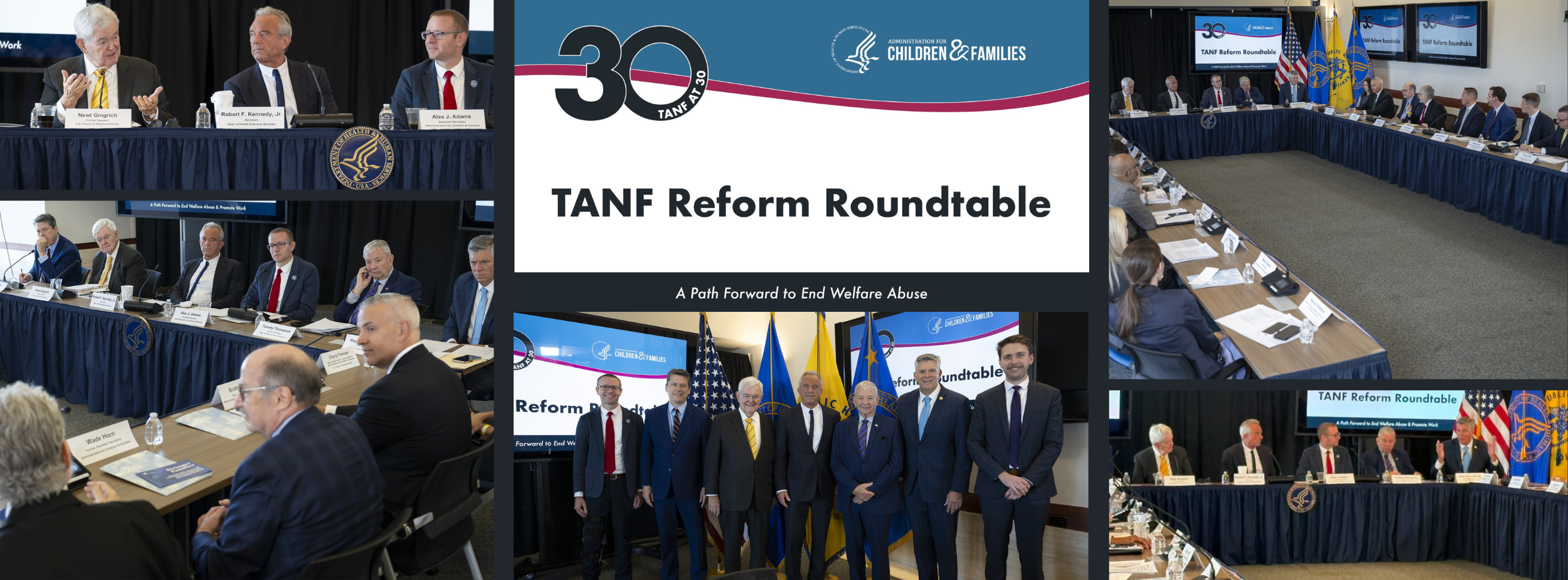
Landmark Dates for TANF
From the Director of the Office of Family Assistance:
- Thirty Years Later, Welfare Reform Needs Its Own Reform
- TANF and Work: The Gap Between Perception and Reality
- TANF and Work: The Caseload Reduction Credit and How States Exploit It
- The Prevalence of TANF Child-Only Cases Involving Immigration-Status-Ineligible Parents
- Safeguarding TANF Assistance: State Options for EBT Location and Purchase Restrictions
Families are Stronger Together
Skills-based hiring is intended to help employers focus more on what people can actually do and less on traditional requirements such as degrees or years of experience. But making that approach work requires a clear understanding of which skills…
As of July 15, 2026, 30 states have either ended or substantially reformed the practice of diverting Social Security survivor benefits from foster youth. The action marks a major milestone in protecting earned benefits for some of the…
Transitioning from foster care into adulthood can be challenging for any young person, but Native youth may also be navigating questions of culture, community, identity, and connection. This resource from the National Tribal Child Welfare Center…
In June 2026, the Office of Family Assistance launched the Programming to Build Strong Families and Promote Economic Independence series, designed to provide flexible, practice-informed…
In June 2026, the Office of Family Assistance launched a series to guide TANF programs in building strong families and promoting economic independence in Tribal communities. This series was designed to provide flexible, practice-informed…
On July 9, 2026, the Administration for Children and Families (ACF) announced 50 states, as well as Washington, D.C. and Puerto Rico, joined “A Home for Every Child (AHEC),” the ACF initiative aimed at increasing the ratio of licensed…
Work Innovations
This toolkit contains a collection of four one-page resources designed to facilitate strong, collaborative relationships with families. The toolkit includes flyers that can navigate Temporary Assistance for Needy Families (TANF) practitioners…
As the Temporary Assistance for Needy Families (TANF) program marks nearly 30 years, conversations about the program’s original intent is gaining renewed attention. This opinion piece reflects on how families, the workforce, and state programs…
The Administration for Children and Families announced a new Technical Assistance Center to help states, Tribes, and territories implement Fostering the…
Skills-based hiring is intended to help employers focus more on what people can actually do and less on traditional requirements such as degrees or years of experience. But making that approach work requires a clear understanding of which skills…
Temporary Assistance for Needy Families (TANF) supports families as they work toward financial independence, and the policies used to measure state performance play an important role in how the program is administered. This issue brief, co-…
Young adults ages 18 to 29 are often expected to make major decisions about work, education, housing, and relationships while they are still figuring out what they want their lives to look like. This Annie E. Casey Foundation podcast introduces…
Promoting Healthy Marriages and Two-Parent Families
The U.S. Department of Health and Human Services (HHS), Administration for Children and Families (ACF), Office of Family Assistance (OFA), held the 2017 National Tribal Summit at the Renaissance Arlington Capital View Hotel in Arlington, Virginia on…
The Office of Family Assistance hosted a Webinar titled When TANF Intersects with Pregnant Teen and Young Parent Services on May 11th, 2016 from 2:00-3:30 p.m. EDT. Pregnant teens and young parents have been a…
The U.S. Department of Health and Human Services' Administration for Children and Families' (ACF) Office of Family Assistance (OFA) hosted this webinar that highlights the redesigned OFA PeerTA (PeerTA) website. PeerTA facilitates information…
The Administration for Children and Families' Office of Family Assistance (OFA) hosted the "Strategies to Assist Noncustodial Parents in Improving Economic Well-Being" webinar. This webinar showcased several programs making headway in this area.…
On April 22, 2014, the Administration for Children and Families' Office of Family Assistance (OFA), Division of Tribal TANF Management and the Office of Child Support Enforcement (OCSE) hosted a webinar, "Tribal Child Support and Tribal TANF:…
The OFA Regions VI & VIII TANF Webinar Series: TANF Data Reporting and Analysis Webinar # 3: Using Research to Inform Practice: ACF's Family Self-Sufficiency and Stability Research Consortium (FSSRC), was held on September 12, 2013. The…